Trade Wars, Dollar Risk, AI Leverage, and the K-Shaped Economy
The global economy is being rewired in real time. Start with a tiny metal striker inside a car door. It may cross the Detroit-Windsor border four, five, or six times before the final vehicle is assembled. It can be forged in one country, heat-treated in another, plated across the border, packaged,…
Start with a tiny metal striker inside a car door. It may cross the Detroit-Windsor border four, five, or six times before the final vehicle is assembled. It can be forged in one country, heat-treated in another, plated across the border, packaged, and then returned for final assembly.
That is what North American economic integration looks like in practice. It is not an abstract trade agreement. It is thousands of interdependent production decisions repeated every day.
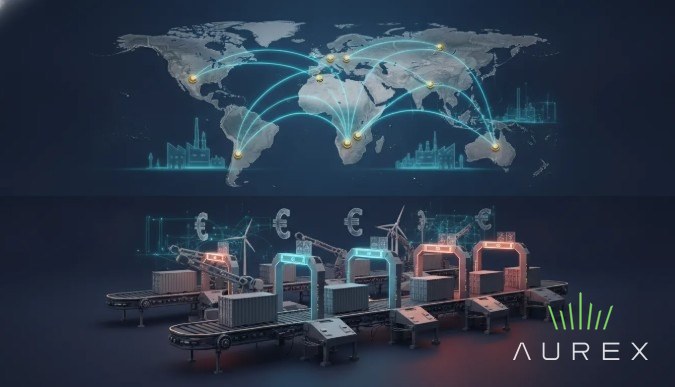
Now place tariffs, strategic competition, currency conflict, and national-security priorities into that system. The result is a profound shift in how capital, labor, supply chains, and political power move around the world.
Below is the full framework: fractured trade routes, pressure on the U.S. dollar and Treasury market, AI's circular financing structure, hidden leverage, and the growing divide between corporate profits and household income.
Quick Summary: The Major Forces Reshaping the Economy
North American auto supply chains are highly integrated, making tariffs on Canadian vehicles, parts, steel, and trucks economically disruptive on both sides of the border.
Canada is responding by strengthening trade and investment ties with countries including China and India, particularly in energy, food, uranium, and critical minerals.
The United States faces a deeper structural problem: sustaining dollar dominance while managing an expanding national debt burden and reduced foreign appetite for Treasury securities.
Stablecoins and short-term Treasury issuance may become increasingly important mechanisms for creating structural demand for U.S. government debt.
The AI boom is funded not only by earnings growth, but also by circular commercial arrangements and growing off-balance-sheet financing.
Corporate profits are strong, while labor's share of national income is weak. AI is being used to reduce labor costs and increase consumer pricing power.
Many companies that cut staff in the name of AI are now finding that institutional knowledge, judgment, and edge-case problem solving are difficult to automate.
Trade Fractures Start With Real Things: Cars, Steel, Energy, and Food
The auto industry shows why trade policy matters far beyond political headlines.
A vehicle assembled in Michigan or Ontario is not purely American or Canadian. Its components can move repeatedly between both countries. A tariff introduced at any point in that chain acts like a toll booth installed in the middle of a factory floor.
The proposed threat of tariffs as high as 50% on Canadian cars, trucks, auto parts, and steel would therefore affect more than Canadian exporters. It would increase costs throughout a single, shared North American production system.
Think of the supply chain like baking a cake with a neighbor across the street. You cross over for flour, return home for sugar, go back for eggs, and then return again to use the oven. A new tariff at every crossing makes the entire process slower, more expensive, and less competitive.
Canada Is Not Standing Still
Canada remains deeply dependent on the U.S. market, but the strategic response is clear: diversify trade relationships and reduce long-term dependency on one customer.
This shift is visible in several areas:
Counter-tariffs on U.S. fish and seafood to protect domestic industries.
Lower tariffs on Chinese electric vehicles.
Efforts to expand pipeline capacity to Vancouver so Canadian oil can reach Asian markets directly.
Stronger bilateral trade relationships with India, focused on energy security, food security, critical minerals, technology, and infrastructure.
Canada and India have set a target of reaching $70 billion in bilateral trade by 2030. The strategic importance is not simply the headline number. It is the composition of that trade.
Canada is positioning itself as a supplier of essential resources, including energy, agricultural products, critical minerals, and uranium. One cited agreement involved $2.6 billion for 22 million pounds of Saskatchewan uranium to support India's expanding nuclear-energy needs.
India, in return, offers scale, manufacturing capacity, technology, and engineering talent. Canadian pension funds are already significant investors in Indian infrastructure, showing that capital is moving ahead of politics.
Why Bilateral Alliances Are Replacing Broad Trade Agreements
The broader trend is the move from large multilateral systems toward smaller circles of trusted partners.
Countries increasingly view food, energy, minerals, industrial capacity, and technology as national-security assets. The question is no longer only, "Who offers the lowest price?" The new question is, "Who will still deliver when the system is under stress?"
This is why bilateral arrangements are becoming more important. Governments want direct control over relationships that affect power generation, food supply, energy access, military readiness, and critical industrial inputs.
The United States is pursuing a more aggressive version of this strategy through tariffs and direct economic pressure. But this approach has a cost: it may accelerate the search by allies and trading partners for alternative supply chains, alternative financial channels, and alternative reserve assets.
The Dollar's Structural Problem: Reserve Currency Status Has a Cost
To understand the trade conflict, it is necessary to understand the dollar.
One argument compares the dollar's global reserve role with the historic resource curse in Appalachia. During the coal boom, landowners sold mineral rights cheaply, coal was extracted, wealth left the region, and many local communities were eventually hollowed out.
The parallel is straightforward. America's most important export became capital itself: the U.S. dollar.
Because the world needed dollars for global trade, reserves, and financial transactions, the United States could finance consumption and deficits more easily than countries without reserve-currency status. The downside is that financial dominance can reduce the urgency to maintain domestic industrial capacity.
The contrast with China is visible in electricity production. U.S. power generation has been broadly flat since 2004, while China's power grid has more than doubled over roughly the same period. Industrial strength ultimately requires physical capacity: electricity, materials, logistics, factories, and skilled labor.
Weaponizing the Dollar Creates Incentives to De-Dollarize
For decades, foreign governments and central banks had a strong incentive to hold U.S. Treasury securities because they needed dollars. That created a reliable buyer base for American debt.
That buyer base is becoming less automatic.
When the U.S. financial system is used to impose sanctions or levy major penalties on foreign institutions, other governments receive a clear signal: access to the dollar system can become a geopolitical vulnerability.
Countries facing that risk have an incentive to create a shield. That shield can include:
Higher gold reserves.
More local-currency trade settlement.
Alternative payment infrastructure.
Reduced dependence on Treasury securities.
New trade alliances that bypass traditional U.S.-centered channels.
Gold has become particularly important because it cannot be sanctioned, frozen, or created through fiscal policy. Gold does not run a budget deficit. It is simply an asset outside the liabilities of any government.
The U.S. Debt Challenge: When Core Spending Exceeds Tax Revenue
The fiscal problem is becoming harder to ignore.
A cited estimate indicates that Social Security, Medicare and Medicaid, veterans' benefits, and interest expense consume 105% of U.S. tax revenue. If that framework is accurate, then every other federal function, including defense, infrastructure, parks, and government operations, must be funded through borrowing.
That is the core debt spiral.
As foreign central banks reduce Treasury purchases, private investors must absorb more government debt. Those investors may demand higher yields to compensate for inflation, fiscal risk, and the scale of new issuance.
Higher yields then increase interest expense. Higher interest expense expands deficits. Larger deficits require more borrowing. That feedback loop is the central risk.
Short-Term Debt, Bond Buybacks, and a Modern Version of Operation Twist
One proposed response is to shift more government borrowing toward very short-term Treasury bills while buying back longer-dated bonds.
The cited framework involves using up to $950 billion from the Treasury General Account to repurchase longer-maturity government bonds, then replacing that debt with short-term, four-week Treasury bills.
For a household analogy, this is like paying off a 30-year mortgage by continually opening and refinancing four-week credit lines.
The strategy can reduce pressure on long-term yields in the short run. It also shifts risk toward the front end of the yield curve, where refinancing needs become constant and Federal Reserve policy has more direct influence.
Why Stablecoins Matter to the Treasury Market
Stablecoins may become a major part of this debt-management strategy.
A stablecoin is a digital asset designed to maintain a fixed value, usually one dollar per coin. To support that peg, issuers often hold reserve assets, including short-term Treasury bills.
That creates a potentially important dynamic:
A stablecoin issuer expands its token supply.
The issuer purchases short-term Treasuries as reserve backing.
The Treasury gains a structural buyer for bills.
The buyer's primary objective is liquidity and dollar backing, not maximizing yield.
If stablecoin issuers become major holders of Treasury bills, they could provide a new buyer base for short-duration U.S. debt.
The long-term implication is more controversial. If nominal interest rates remain below inflation, the government can reduce the real value of outstanding debt over time. This is financial repression: debt becomes easier to manage in real terms, while savers, retirees, and fixed-income investors lose purchasing power.
The Treasury and the Federal Reserve May Be Pulling in Different Directions
The Federal Reserve's stated inflation objective is 2%. A Treasury strategy that relies on keeping borrowing costs contained and allowing inflation to run above bond yields can conflict with that objective.
This creates a policy collision.
The Fed relies on market signals, including Treasury yields, to gauge financial conditions. If the Treasury actively intervenes to suppress long-term yields, those signals may become less informative. The central bank could be trying to fight inflation while the fiscal authority is trying to manage debt through lower real financing costs.
That tension can create volatility across bonds, currencies, equities, and commodities.
Capital Is Flowing Into AI Compute, but the Financing Structure Matters
As trade relationships fracture and debt concerns rise, institutional capital is pouring into AI infrastructure.
Chips, data centers, power capacity, cloud platforms, and GPU clusters are increasingly being treated as strategic assets. The AI buildout is not merely a technology trend. It is becoming an industrial and geopolitical competition.
Nvidia represents the center of this boom. Despite expectations for extraordinary earnings growth, its forward price-to-earnings multiple has compressed to around 15 times expected earnings.
That matters because a lower valuation multiple, even alongside very high growth, signals skepticism. Investors may believe that current earnings are strong while questioning the durability, quality, or financing of future demand.
The Data-Center Math Is Aggressive
One concern is the gap between projected AI infrastructure investment and the revenue expected to be generated from it.
Hyperscalers such as Microsoft, Amazon, and Google are building massive data-center and chip capacity. The cited figures estimate a roughly $5 trillion capital base against approximately $2 trillion in potential revenue.
That does not automatically mean the investment will fail. It does mean that return on invested capital must be watched closely. Capital spending can grow much faster than revenue for a period, but eventually the investment must produce cash flow that justifies its scale.
Circular AI Revenue: Growth Can Look Stronger Than End Demand
The AI ecosystem has developed a circular structure that deserves close analysis.
The simplified loop looks like this:
Nvidia invests in specialized cloud providers, often called neo-clouds.
Those providers use the capital and backing to purchase Nvidia chips.
The cloud providers rent compute capacity to major customers such as Microsoft.
Microsoft also has financial relationships with Nvidia and AI developers.
AI developers depend on cloud capacity while simultaneously attempting to develop their own chips and infrastructure.
The result is a closed loop of investment, hardware purchases, cloud spending, and revenue recognition.
A useful analogy is a restaurant owner giving money to friends and asking them to buy meals at the restaurant. The restaurant looks busy, revenue rises, and outside observers see demand. But the economic value of that revenue depends on whether the spending is truly independent and sustainable.
Equity investors appear to understand this risk, which helps explain why Nvidia's valuation multiple has compressed despite unusually strong reported growth.
The Bigger Risk Is Phantom Leverage
Circular revenue is visible. Off-balance-sheet leverage is more dangerous because it can remain hidden until conditions deteriorate.
Broadcom has reportedly negotiated up to $100 billion in special purpose vehicles, or SPVs, to finance AI chips for Anthropic, on top of $35 billion of prior backstopped financing.
An SPV is a separate legal structure created to hold assets, debt, or project risks outside the main company's balance sheet.
In simple terms, it is a mini-company designed to hold a specific pool of financing. The sponsor may still bear economic risk through guarantees, commitments, or backstops, but the debt is less visible in the sponsor's reported financial statements.
This structure is significant because off-balance-sheet financing played a major role in the 2008 financial crisis. Risks appeared contained until falling asset values and missed payments pushed obligations back onto major balance sheets.
Data-Center Financing May Be Avoiding Traditional Risk Controls
After the 2008 crisis, Dodd-Frank introduced risk-retention requirements intended to ensure that lenders maintained exposure to the loans they originated.
The cited analysis argues that data-center securitizations have received exemptions from these requirements. That opens the door for private-equity firms and private-credit managers to originate more AI infrastructure loans outside traditional banking channels.
The risk is clear:
AI demand slows.
A cloud provider or AI developer misses a payment.
Off-balance-sheet guarantees are triggered.
Debt and losses return to chipmakers or other sponsors.
Credit markets reprice the risk rapidly.
The bond market may already be detecting this issue. A rising cost to insure Broadcom debt through credit default swaps indicates that credit investors are demanding more protection against default risk.
Equity markets can remain optimistic for extended periods. Credit markets tend to focus more directly on whether debt can be repaid.
Retail Speculation Is Rising Alongside Institutional Leverage
There is a familiar late-cycle pattern emerging.
At the institutional level, capital is using complex financing structures, SPVs, securitizations, guarantees, and private-credit vehicles to fund AI infrastructure.
At the retail level, markets are becoming increasingly gamified through hourly leveraged ETFs, event contracts, and short-term bets on intraday price movements.
This is the "Vegas vacation" phase of market behavior. Complex leverage sits at the top. Highly speculative trading spreads at the bottom.
That does not mean every AI investment or leveraged trade will fail. It means risk management becomes more important because the system becomes more fragile when too many participants depend on uninterrupted momentum.
The K-Shaped Economy: Capital Rises While Labor Falls
All of these macro forces eventually reach households, workers, and operating businesses.
The result is a K-shaped economy.
In a K-shaped economy, one group moves sharply higher while another moves lower. The upper branch represents owners of capital: corporations, shareholders, asset holders, and highly profitable businesses. The lower branch represents many wage earners and consumers facing higher costs and weaker real income growth.
The figures are stark:
U.S. corporate pretax profits are cited at 18% of national income, the highest share since World War II.
Employee compensation is cited at 60% of national income, the lowest share since the 1950s.
Real hourly earnings declined by 0.2%, meaning inflation outpaced wage growth.
CEO pay at major low-wage employers rose by an average of 41%.
The distribution of economic gains is moving toward owners and away from labor.
AI Layoff Regret: Why Replacing People Has Been Harder Than Expected
Many executives assumed that AI could immediately replace support staff, engineers, analysts, and routine operations workers.
That assumption is proving expensive.
A Forrester report cited in the analysis found that 55% of companies that laid off staff because of AI integration later regretted the decision. Roughly two-thirds of those companies were reportedly trying to rehire for similar roles, often at a higher cost than the savings initially achieved.
Klarna became a high-profile example. The company publicly highlighted the replacement of hundreds of customer-service employees with AI, then later moved to bring human workers back as service quality deteriorated.
Ford has also reportedly rehired engineers to correct serious errors generated by automated AI systems.
The core management mistake is simple: executives often see visible tasks but fail to measure invisible work.
Visible work includes answering support tickets, writing basic code, filling forms, and executing repeatable processes. Invisible work includes context, institutional memory, judgment, escalation management, exception handling, relationships, and knowing why a process exists.
Chesterton's Fence Applies to Workforce Decisions
Chesterton's Fence is the principle that you should not remove a fence until you understand why it was built.
Companies that eliminate experienced employees before understanding their real contribution can discover too late that those employees were holding together critical systems. AI can assist with routine tasks, but it can struggle with edge cases, ambiguous situations, and lessons learned from prior failures.
The cited projection is that AI may automate only about 6% of jobs by 2030. That is far below the most aggressive narratives surrounding immediate workforce replacement.
AI's More Immediate Use Case: Extracting More Revenue From Consumers
AI may be less effective at fully replacing skilled teams than many companies expected. It is highly effective, however, at pricing, targeting, and conversion optimization.
That is where the next phase of adoption is accelerating.
Airbnb is using AI to surface listings and price points designed to maximize the probability of conversion. Delta is deploying AI in fare setting and baggage handling, with an objective of increasing profit margins from 10% to 15%.
This is dynamic pricing at scale. The system can estimate what a specific customer may be willing to pay and present an offer designed to capture as much of that willingness as possible.
For companies, this can expand margins. For consumers, it can mean fewer bargains, more personalized pricing, and persistent pressure on household budgets.
The Breaking Point: Companies Cannot Outprice Their Customers Forever
The central contradiction is now visible.
Companies are using AI to increase prices and improve conversion. At the same time, they are cutting payroll, limiting wage growth, and reducing labor's share of income.
That can produce exceptional profit margins today. It can also weaken the consumer base that companies depend on tomorrow.
A consumer-driven economy cannot remain healthy if households lack disposable income.
If companies keep extracting more revenue from consumers while wages stagnate, spending eventually slows. When spending slows, revenue growth slows. When revenue growth slows, highly leveraged investments and aggressive valuation assumptions become harder to sustain.
This is where trade fragmentation, Treasury-market stress, AI leverage, and the labor divide converge.
What This Means for Investors, Companies, and Management Teams
The current environment requires a 360-degree analysis. Financial statements alone are not enough. Investors and leadership teams need to evaluate balance-sheet risk, supply-chain exposure, pricing power, workforce capability, customer affordability, and geopolitical dependency together.
For Investors
Watch credit markets, not only stock prices. Credit default swaps, bond yields, and financing costs can reveal risk before equities react.
Separate AI revenue growth from independent end-customer demand. Circular funding structures can make growth appear stronger than it is.
Evaluate balance-sheet exposure to guarantees, SPVs, vendor financing, and private-credit arrangements.
Maintain discipline around valuation. Strong revenue growth does not eliminate capital-intensity or financing risk.
Consider the impact of inflation and negative real yields on cash, bonds, and long-duration assets.
For Corporate Leaders
Do not eliminate experienced employees before mapping their institutional knowledge and exception-handling responsibilities.
Measure AI return on investment using service quality, error rates, rework, retention, and customer outcomes, not only headcount reduction.
Stress-test supply chains for tariffs, border delays, energy disruption, and single-country concentration.
Use dynamic pricing carefully. Short-term margin expansion can damage trust and reduce long-term customer value.
Assess AI infrastructure commitments under lower-demand scenarios, higher financing costs, and delayed monetization.
Conclusion: The Economy May Move From Gold, to Dollars, to Compute
The economic system is changing at every level.
Trade is moving from seamless integration toward strategic blocs. The dollar faces pressure from debt expansion, sanctions risk, and reserve diversification. Treasury financing is becoming more dependent on short-duration debt and potentially stablecoin demand. AI investment is expanding through circular capital flows and increasingly complex leverage structures.
Meanwhile, workers face stagnant real wages, consumers face more sophisticated dynamic pricing, and companies are learning that human judgment is harder to replace than a spreadsheet model suggests.
The most provocative question is whether AI compute itself becomes a sovereign reserve asset.
Gold once backed money. Then the dollar became the central reserve asset of the global system. In the next phase, countries may compete to control the assets that determine computing capacity: power generation, data centers, advanced chips, GPU clusters, and the supply chains required to sustain them.
That is the new paradigm. The world is not simply experiencing a cyclical market shift. It is rebuilding the machinery of global finance, production, and power from the ground up.
IMPORTANT DISCLAIMER: This document is provided for informational and educational purposes only. It does not constitute investment, legal, tax, or other professional advice, and nothing contained herein should be construed as a recommendation, an offer to sell, or a solicitation of an offer to buy any security or other financial instrument, in any jurisdiction. The information presented is obtained from sources believed to be reliable, but its accuracy and completeness are not guaranteed, and certain figures are estimates that may prove incorrect. Past performance is not indicative of future results, and all investments involve risk, including the possible loss of principal. Readers must conduct their own independent research and due diligence and should consult a duly licensed financial, legal, or tax professional regarding their individual circumstances before making any investment decision. The author and ACapital Group LLC accept no liability for any loss arising from the use of this material.
We use cookies to analyze website traffic and optimize your website experience. By accepting our use of cookies, your data will be aggregated with all other user data.



Comments (0)
No comments yet — be the first.